


We Remove Spiders From Your Property and Keep Them From Coming Back
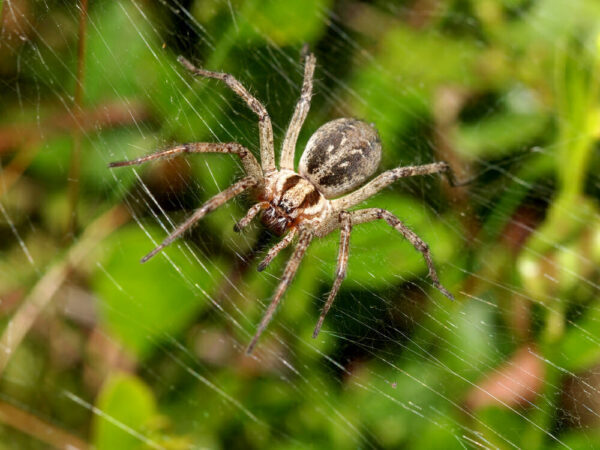
If you live in the Bay Area, spiders are a year-round problem. Our mild climate keeps insects active all year, giving spiders a steady food supply right outside your home.
Most spiders are just a nuisance, but black widows are common in our area, and their venom can seriously harm you and your family.
Smith’s Pest Management removes spiders using targeted de-webbing, exclusion, and eco-friendly treatments that protect your family and keep spiders from coming back.
Call now for a FREE inspection!
How We Treat for Spiders
1
Inspect the Entire Property
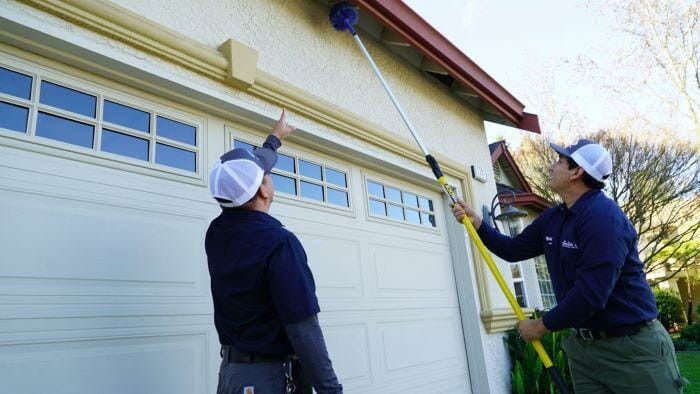
We inspect your entire property to find where spiders are active, including:
- The foundation, eaves, garage corners, and crawl space vents for webs and egg sacs, with extra attention to ground-level areas where black widows build their webs
- Exterior lighting fixtures, which attract the insects that spiders feed on
- Entry points like gaps under doors, foundation vents, and cracks in the siding that spiders are using to get inside your home
2
Remove Webs and Treat at the Source
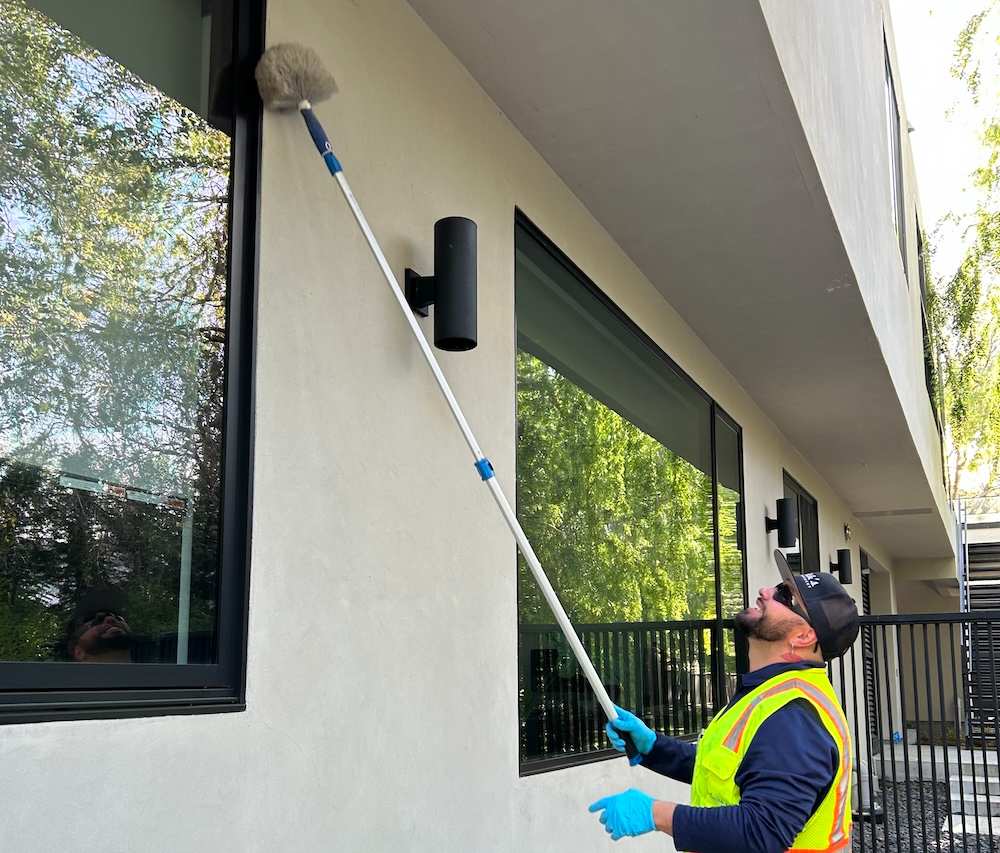
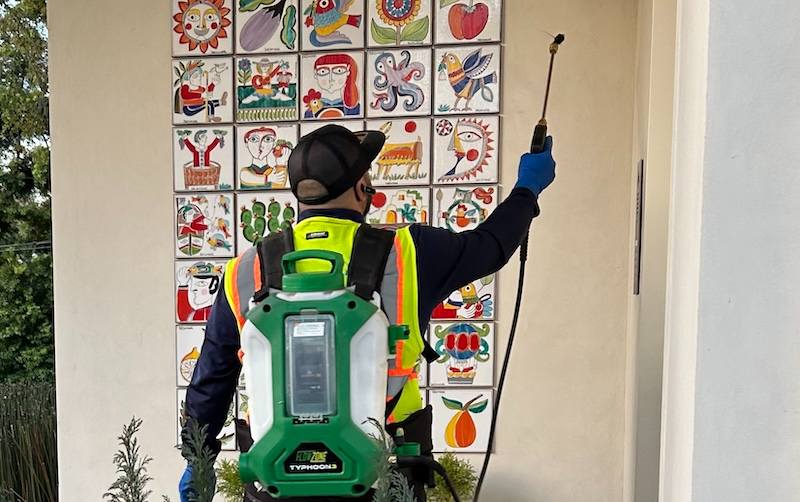
Rather than spraying, we eliminate spiders through de-webbing, exclusion, and targeted treatment, including:
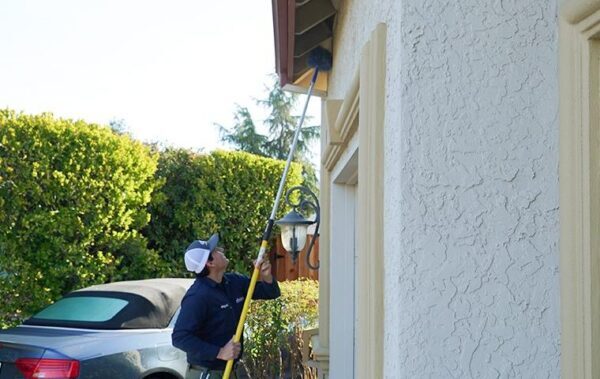
- De-webbing the entire exterior of your home, removing webs from eaves, foundation corners, garage entries, window frames, and outdoor structures
- Applying targeted treatments directly into cracks, voids, and harborage areas where spiders hide and lay egg sacs
- Treating the perimeter and entry points with eco-friendly residual products and sealing gaps that spiders are using to move inside your house
3
Follow Up
To keep spiders from returning to your home, we:
- Return on a regular schedule to inspect for new spider activity, and reapply treatments as needed
- Alert you to conditions making your property attractive to spiders, like dense ground cover against the house and exterior lights left on overnight
- Re-treat between scheduled visits at no charge if spiders return
What Kind of Spider Are You Dealing With?
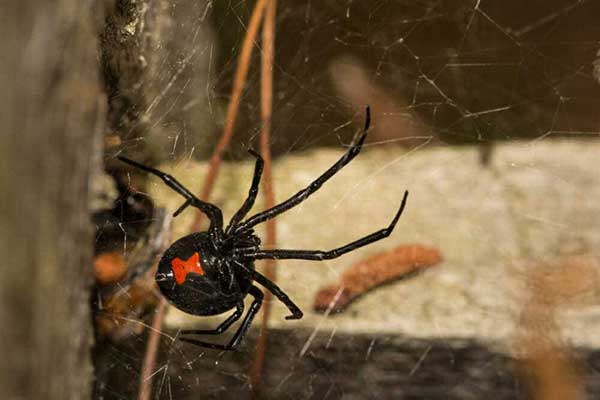
Black Widow
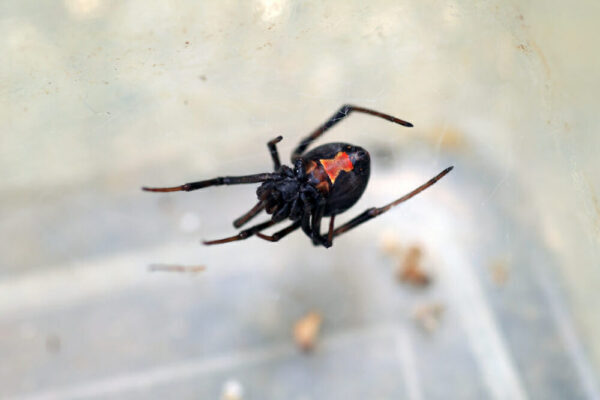
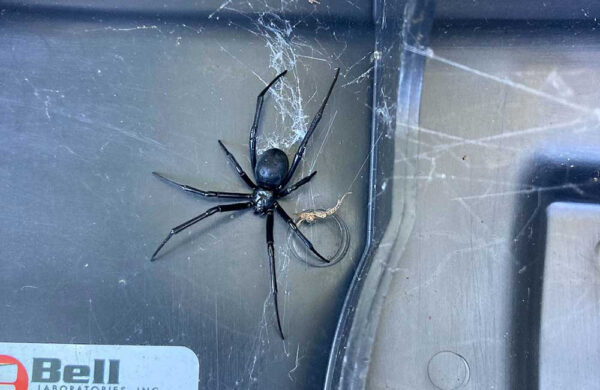
Black widows are common across the Bay Area and are especially active in the warmer, drier inland cities like San Jose, Livermore, Walnut Creek, and Concord. Their venom is strong enough to cause severe muscle pain, cramping, and serious illness in children and older adults. You’ll recognize them by their shiny black body and the red hourglass marking on the underside of the abdomen. They build thick, tangled webs almost always at ground level, along your foundation, inside garage corners, and behind stored items in sheds and under decks.
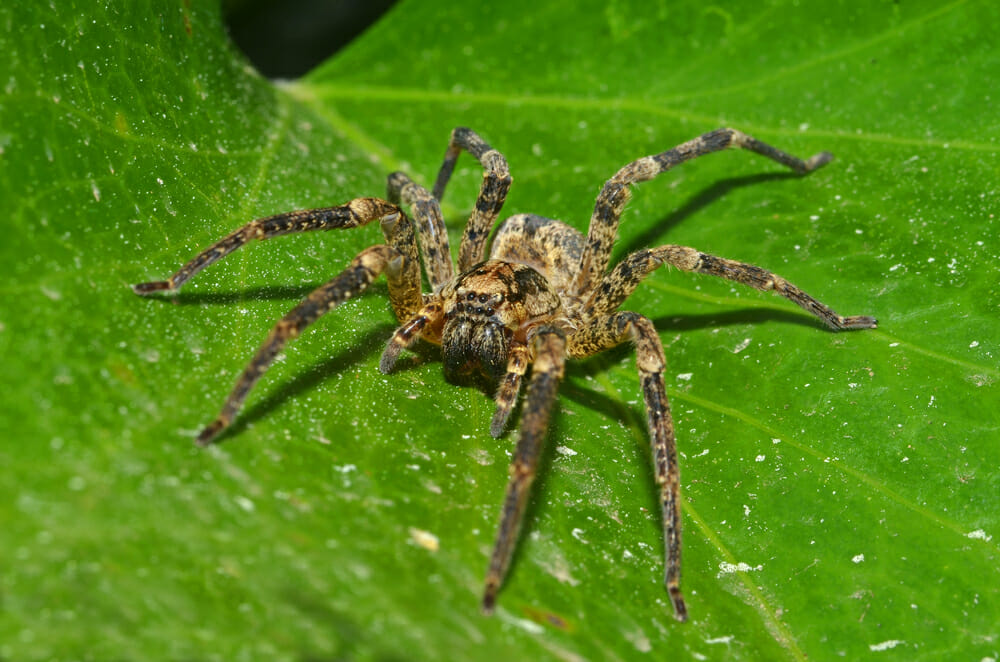
Wolf Spiders
Wolf spiders are large, fast-moving, and brown, and they are one of the most common spiders found in South Bay and East Bay neighborhoods that border open fields, parks, and undeveloped hillsides. They don’t build webs to catch prey, they hunt on the ground and chase down insects directly. In the fall, male wolf spiders leave their burrows to roam in search of females, which is when homeowners start finding them running across floors and inside rooms.
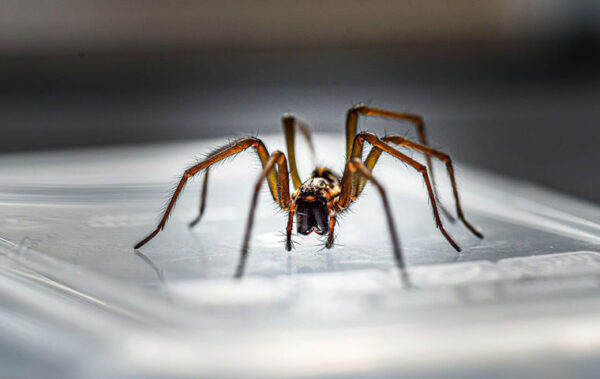
Common House Spiders
House spiders are small, brownish spiders with striped legs that you’ll find in corners, window frames, and along ceilings throughout your home. They’re harmless, but they build messy webs that accumulate fast in low-traffic areas like garages, spare rooms, and basement stairwells. Because they breed indoors, removing webs regularly disrupts their nesting cycle and prevents egg sacs from hatching and adding to the population inside your home.
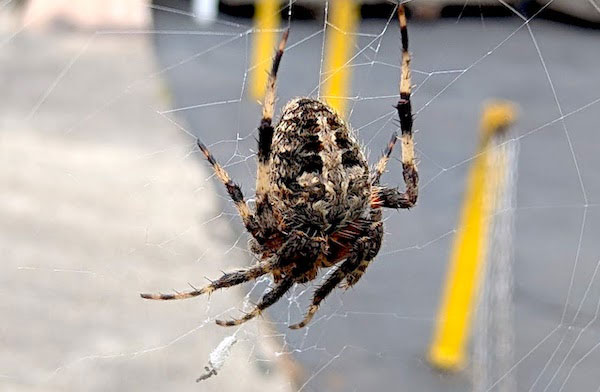
Orb-Weaver Spiders
Orb-weavers are one of the most common spiders across the Bay Area, especially in suburban homes with gardens and yards with mature trees, ornamental plantings, and irrigated landscaping. They build the large, round, symmetrical webs you’ll find stretched across your garden beds, fence lines, and patio structures. They’re harmless and feed on mosquitoes, gnats, flies, and small moths that are active around your yard. You can knock their webs down, but they’ll rebuild them within a day or two, making them a constant nuisance.
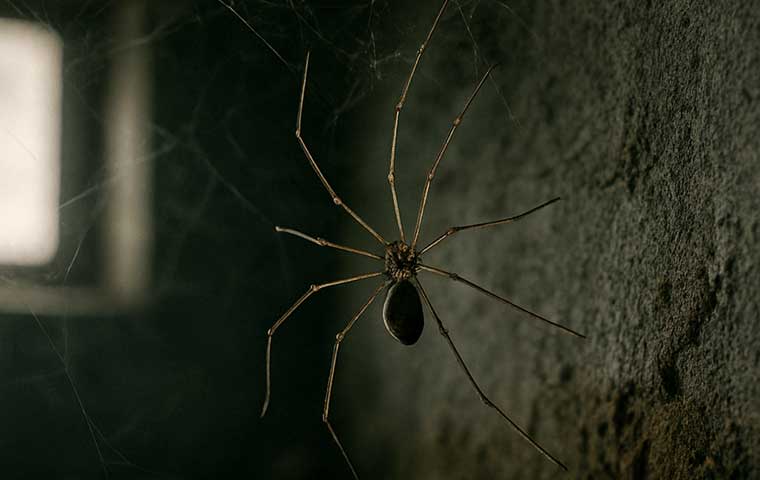
Cellar Spiders (Daddy Longlegs)
Cellar spiders are the thin, long-legged spiders you’ll find hanging in the corners of your garage, basement, or crawl space. They’re harmless, but they build messy, irregular webs that accumulate fast and make spaces look unkempt. In Bay Area homes with older construction and damp crawl spaces, common in Oakland, Berkeley, and Alameda, cellar spider populations can build up quickly.
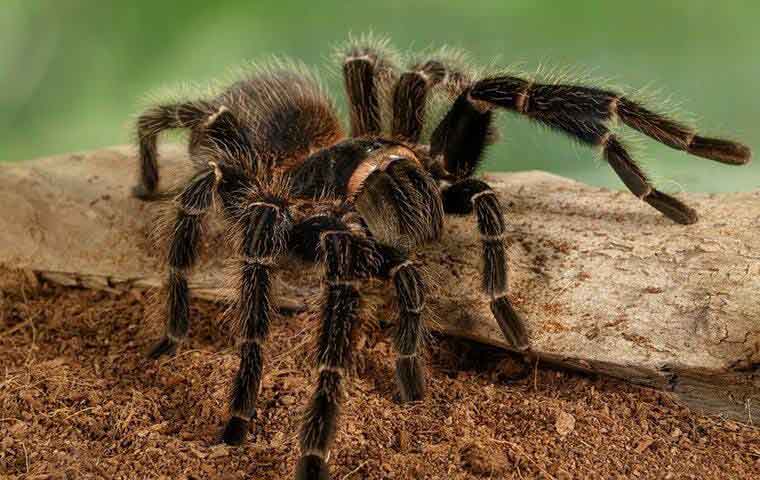
Tarantulas
Tarantulas are large, hairy spiders ranging from brown to black, and while they look intimidating, they are not aggressive and rarely bite. They occasionally turn up in the Bay Area, particularly in dry, open areas of the South Bay and East Bay foothills, where they dig burrows in the ground. Tarantulas are harmless to humans, but finding them regularly on your property means your yard is supporting a significant insect population that is likely attracting other pests.
Success Story: How We Helped a Homeowner in Pleasanton Get Rid of Black Widows Around the House
A homeowner in Pleasanton contacted us after finding multiple black widow webs along the base of his garage and along the foundation of the house. He had knocked the webs down himself several times, but they always came back within a week. He had two young kids and was no longer comfortable letting them play near the side yard.
When we inspected the property, we found black widow webs at nearly every ground-level corner of the garage, under the back deck, and along the fence line adjacent to a woodpile. The woodpile was stacked directly against the house, which is a perfect harborage for both spiders and the insects they feed on. We also found a gap under the side door of the garage that spiders were using to move inside the garage.
We de-webbed the entire exterior, applied a targeted treatment to all ground-level cracks and voids along the foundation, and recommended moving the wood pile away from the house. We also sealed the gap under the garage door.
Within two weeks, the homeowner reported no new webs in any of the areas we treated. He now has the property on a regular service schedule to keep it that way.

What Our Customers Say
FAQ
Spraying alone rarely works for spiders. Unlike most insects, spiders walk on the tips of their legs and don’t absorb much residual insecticide from treated surfaces. They also don’t groom themselves the way ants or cockroaches do, so they don’t pick up enough active ingredients to be affected. To get rid of spiders for good, you need to remove their webs, treat the areas where they hide, and eliminate the insects they are feeding on.
Your porch light is attracting a lot of bugs at night, and so the spiders go there. If your security allows it, turning your porch light off is one of the simplest things you can do to reduce spiders around your home. If you need the light on, switching to a yellow or warm-toned bulb attracts fewer insects and reduces web buildup around fixtures.
Yes. We use targeted treatments applied directly into cracks, voids, and harborage areas – not broadcast sprays across living spaces. De-webbing is completely non-toxic and makes up a large part of our spider work. We use eco-friendly residual products on the exterior perimeter, applied in ways that minimize any exposure to children and pets.
Most homeowners see significantly fewer spiders and their webs after the first visit. Full control (meaning minimal to no new webs and spiders) typically takes two to three visits over four to six weeks, depending on how established the spider population is.
For most Bay Area homes, yes. Spiders are persistent because the conditions that attract them, such as insects, outdoor lighting, dense landscaping, and gaps in the home’s exterior, don’t go away after a single treatment.
Regular service keeps web activity down, catches new harborage areas before they build up, and gives you a set of professional eyes on the exterior of your home every visit.
Plus, if spiders return between scheduled services, we’ll come back and re-treat at no charge as part of our satisfaction guarantee.
Unfortunately, there are several ways for spiders to get inside your home, such as:
- Common entryway points, like doors, windows, or window screens
- Small holes, gaps, or cracks in the walls and foundation
- Gaps around cables, pipes, or plumbing lines
- Hiding in other objects that you bring into your home, like firewood, storage boxes, camping equipment, or plants
Although there are no shortage of entry points for spiders, the more concerning question for homeowners is why spiders are getting in. Some spiders may make their way inside during the cooler months, but most of the time, spiders are there to eat other insects. If you’re seeing an abundance of these eight-legged creatures, it’s a good indicator you’ve got another pest issue on your hands.
There are a few simple steps you can take to make your property less attractive to spiders:
- Turn off exterior lights at night or switch to yellow bulbs, which attract fewer insects and give spiders less reason to congregate around your home
- Trim back shrubs and ground cover touching the house, since dense vegetation against the foundation gives spiders a direct path inside
- Move firewood away from the foundation and store it off the ground
- Seal gaps under doors and around foundation vents, which are the most common entry points for wolf spiders and grass spiders moving inside your home in the fall
- Remove webs regularly, since spiders are less likely to stay in a spot where their webs keep getting cleaned up
- Don’t allow areas with excess moisture, like standing water or leaky pipes, to go unaddressed.
- Regularly clean up cluttered areas in your home that may give spiders a hiding spot.
- Seal your trash, recycling, and composting bins .
- Don’t leave leftover food or pet food out.
- Keep your food in airtight containers and proper storage areas, like your fridge or pantry.
At Smith’s Pest Management, we typically charge $100–$250 per visit, depending on your home’s size and how many areas we need to treat, such as garages, eaves, and outdoor storage spaces. Most homeowners spend $250–$350 per month on ongoing indoor and outdoor spider control. During our visits, our technicians regularly remove webs, treat areas where spiders hide, and reduce the insects they feed on to help keep spiders out of your property. Our recurring services include a 100% satisfaction guarantee. If you continue seeing spiders around your home, we’ll come back to your property, find where the spiders are hiding and entering your home, and provide additional treatments at no extra cost when necessary.