


Stop Meadow Voles From Wrecking Your Landscape

Voles can wipe out years of your landscaping work in a single season.
These small rodents, also called meadow mice, feed underground on roots, bulbs, and tree bark. In doing so, they destroy garden beds, kill mature plants, and leave your lawn full of tunnels and dead patches.
Smith’s Pest Management helps homeowners and businesses across the Bay Area and Central Coast get rid of voles quickly and protect their yards for good.
Don’t wait – call now to schedule a FREE inspection!
Signs You’ve Got Voles on Your Property
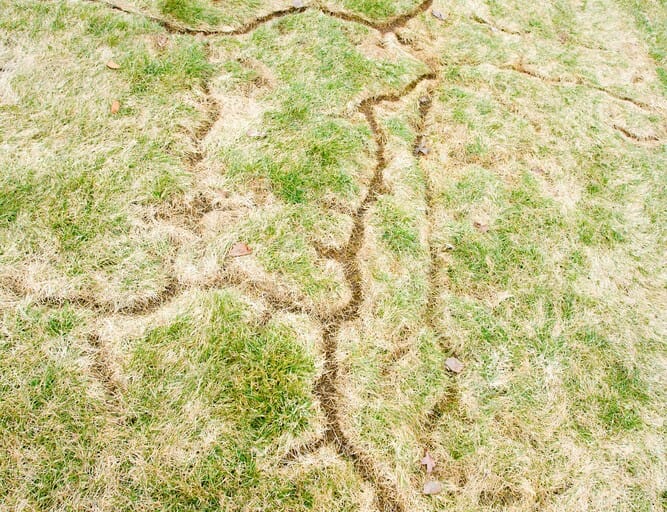
Trails Running Through Your Yard
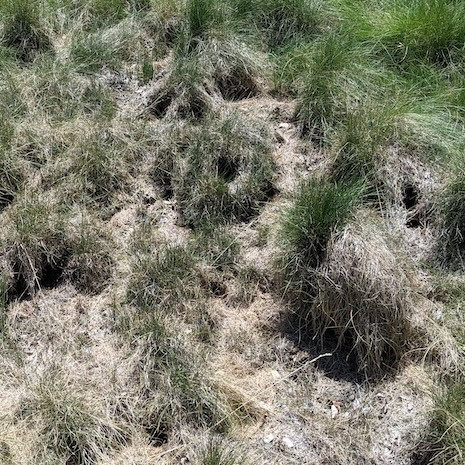
Voles leave behind narrow surface runways that cut through grass and ground cover.
You’ll see:
- Thin paths about the width of a golf ball
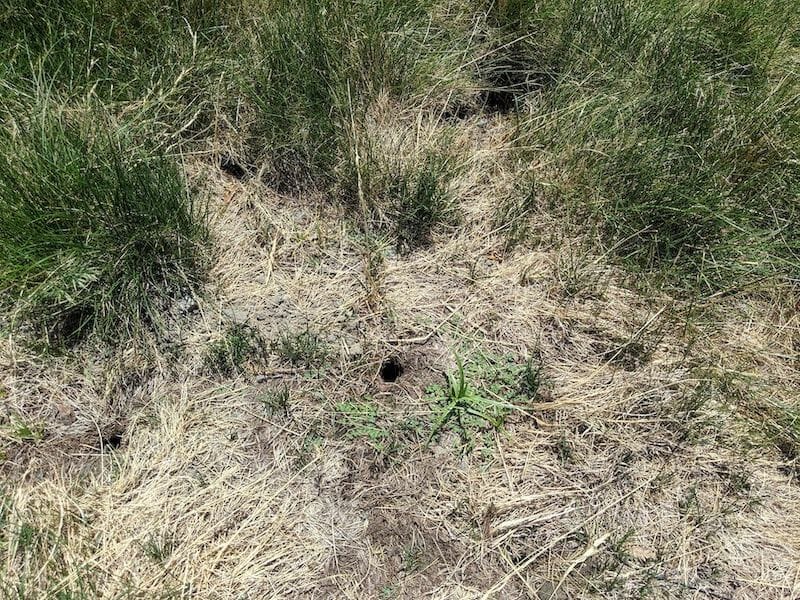
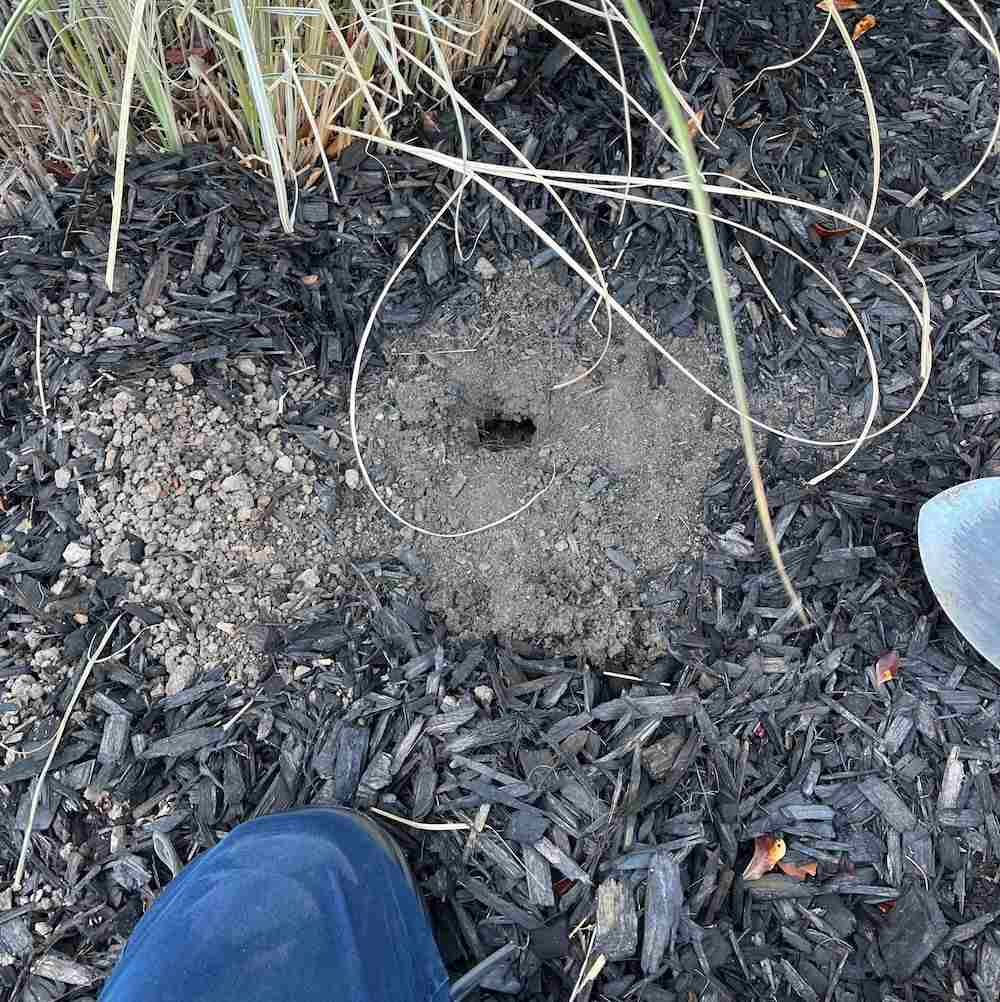
- Small, clean, circular holes about 1 to 2 inches wide that connect each end of the runway, without any dirt mounds around them.
- A network of trails across turf
These are active travel routes. Voles move through them constantly to feed.
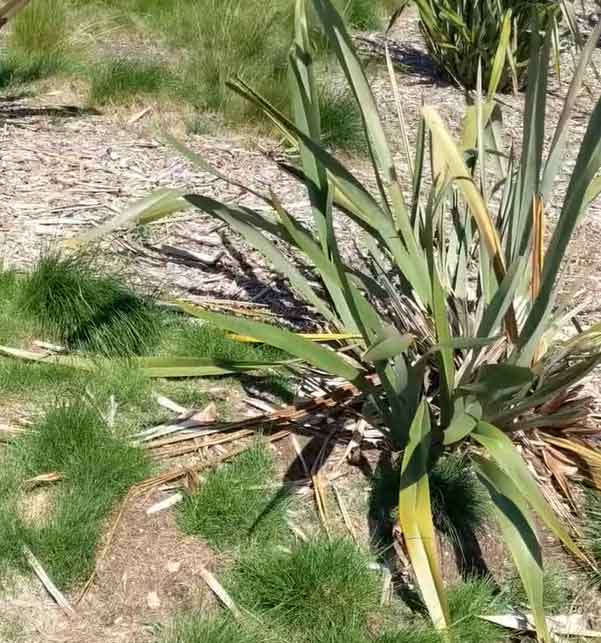
Plants Falling Over or Hollowed Out
Voles attack plants at the base.
Instead of chewing leaves, they:
- Eat the crown from underneath
- Destroy root systems
- Cause plants to collapse suddenly
You may pull on a plant and find nothing holding it in place.
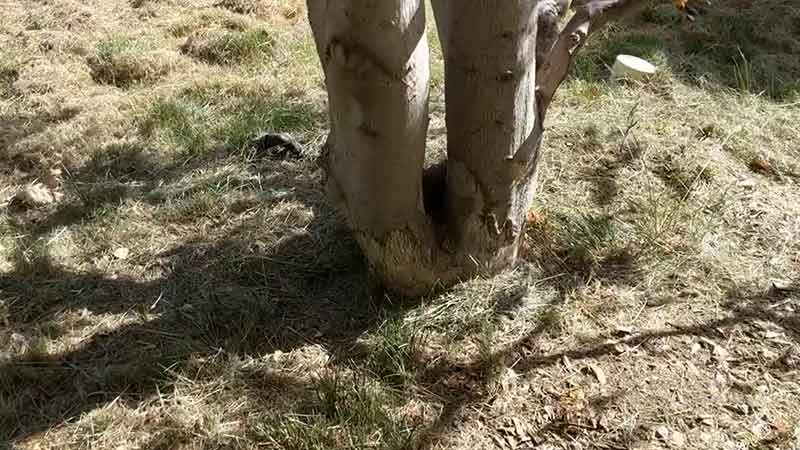
Bark Damage at Ground Level
Voles chew bark right where the trunk meets the soil.
If they remove enough bark around the tree, it cuts off nutrient flow, and the tree dies.
This kind of damage:
- Does not heal
- Often goes unnoticed until it’s too late
- Can lead to full tree loss
Smith’s Vole Control Process
1
Inspect Property and Develop a Plan
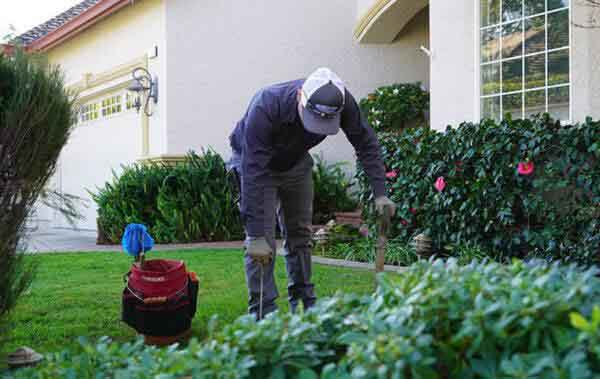
Our licensed technicians inspect your entire property to locate active runways, fresh plant damage, and nesting areas.
Based on what we find, we develop a treatment plan using Integrated Pest Management techniques tailored to the severity of your infestation and the conditions on your property.
2
Treat Active Vole Runways
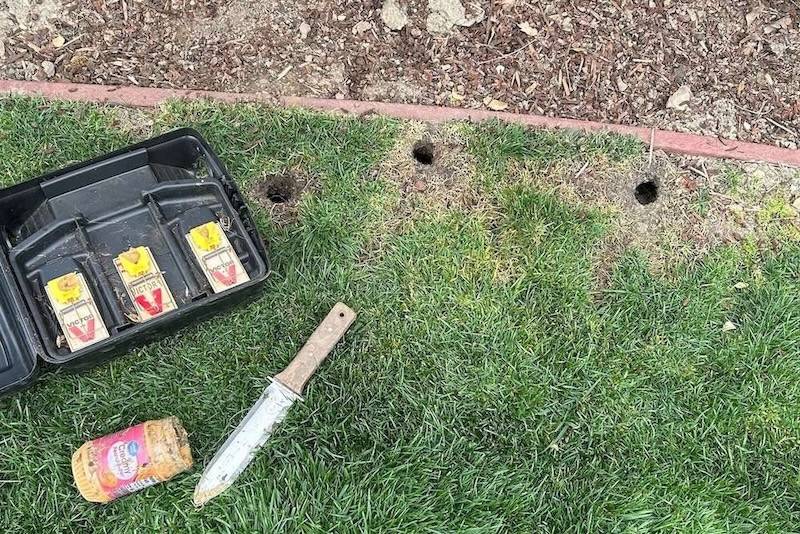
Our technicians set tamper-resistant traps directly over active runways, cover them with a shroud, and mark them with flags.
Depending on the severity of the vole infestation, we also place AB2552-compliant bait stations around your property or inject carbon monoxide directly into holes to eliminate them humanely.
3
Monitor, Remove, and Adjust
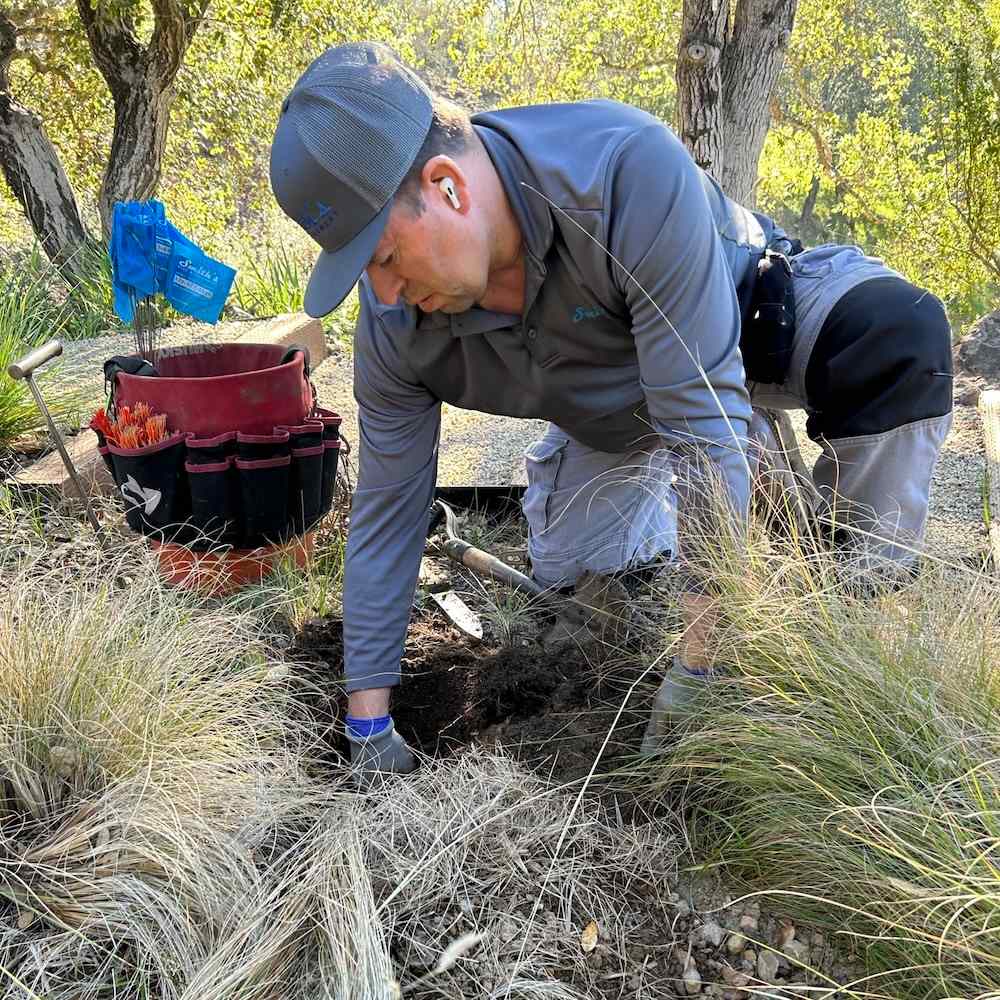
We return every few days to remove captured voles, monitor for new activity, and re-bait traps and bait stations as needed.
We keep coming back until voles are completely gone from your property.
How We Keep Voles From Coming Back
Ongoing Monitoring and Control
New voles can move in after our initial treatment, especially on properties with irrigated lawns, dense ground cover, or nearby open space.
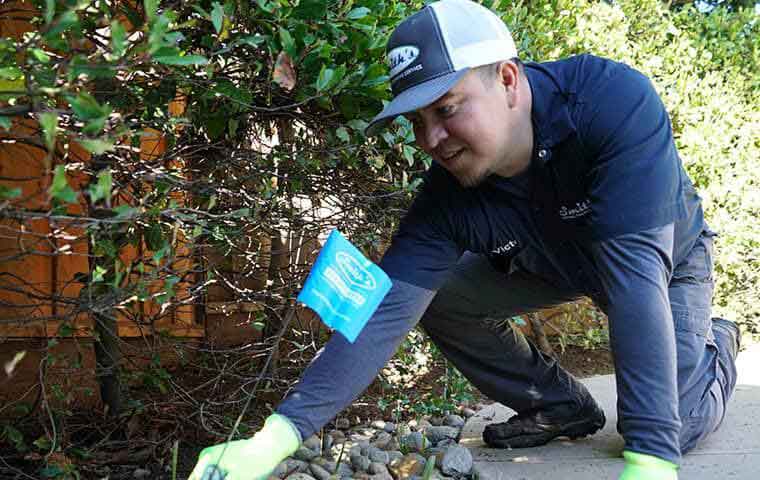
We offer ongoing monitoring services to catch new activity early and keep voles from coming back.
Landscape Adjustments
Voles need dense cover to feed and nest safely.
We recommend cutting back thick grass and ground cover and keeping planting areas maintained and open.
Less cover makes your property harder for voles to settle in and easier for us to monitor.
Success Story: How We Helped a Livermore Homeowner Get Rid of Voles
A property owner in Livermore called us after noticing narrow trails cutting through their lawn and plants starting to give way at the base. A few shrubs had already died, and young trees were showing chew damage right at the trunk.
When we inspected the property, we found active vole runways across the lawn and throughout the planting beds. The grass and ground cover were thick, which gave the voles full protection and let them move from plant to plant without exposure.
We set traps directly over the busiest runways. Within the first few visits, we started removing multiple voles from those areas.
As we cleared out the main zones, we saw new activity pop up along the edges of the yard. We set traps along those runways and added bait in the thickest sections where the population was highest.
After a few weeks of consistent treatment, the runways stopped showing up, and no new plant damage appeared.
The property owner chose ongoing service so we can stay on top of new activity and stop voles before they spread again.
What Our Customers Say
FAQ
Voles damage trees, shrubs, lawns, and garden beds. They strip bark from trees and woody plants, which causes dieback and can kill them outright.
They chew through the center of bunch grasses and perennials like New Zealand flax, killing them from the inside.
They also tunnel under root crowns and chew off roots the same way gophers do.
In your lawn, look for narrow surface runways about the width of a golf ball, each connected to small holes at both ends. Voles don’t hibernate, so they keep feeding through winter, chewing the base of woody plants under the snow. The damage often doesn’t show up until spring.
Cost depends on the size of your property and the severity of the infestation.
Schedule an inspection, and we will assess the extent of the problem and give you an accurate quote.
Our recurring pest control services come with a 100% satisfaction guarantee and warranty coverage.
Voles are drawn to yards with dense ground cover, thick shrub beds, tall grasses, and brush piles.
In the Bay Area, irrigated lawns and gardens give voles a steady food source year-round. Properties near open space are more likely to see vole activity, especially in areas like Livermore, Pleasanton, and San Ramon, where grasslands and hillsides border residential neighborhoods.
Construction activity and seasonal changes can push voles into new areas, including your yard.
Yes. Voles don’t hibernate and breed year-round, producing up to 10 litters per year.
In the Bay Area, the mild climate and irrigated landscapes give voles a steady food supply in every season, so populations can grow and spread faster here than in colder regions.
To prevent voles from coming into your yard you have to eliminate the food sources and hiding spots that attract them:
- Mow your lawn regularly and remove dense ground cover and weeds like clover and chickweed
- Clear away wood piles and debris
- Apply mulch lightly around trees and shrubs to avoid creating hiding spots
- Wrap the lower trunk of young trees with wire mesh or plastic tubing to protect them from gnawing
- Rake up dead grass and reseed any damaged areas to eliminate vole trails
At Smith’s Pest Management, our vole control service typically costs 150–300 per visit, depending on your property size and the extent of vole activity.
Voles breed quickly and can produce large populations in a short time. That’s why we recommend ongoing maintenance rather than a one-time treatment. Our team will inspect your property, assess the vole activity, and provide a free quote based on your needs.
For ongoing protection, we offer a Pest Protection Plan that typically costs 250–350 per month. Our technicians regularly inspect your property, trap active voles, and help prevent further damage to your lawn and garden plants.
We back our recurring services with a 100% satisfaction guarantee. If you’re unhappy with the results, we’ll reinspect your property and provide additional treatments at no extra cost if our service manager determines they’re necessary.