
If you live in Berkeley, you know the frustration of opening your kitchen cabinet and finding a trail of ants marching through your pantry.
At Smith’s Pest Management, we’ve helped hundreds of Alameda County homeowners get rid of ants, so we know exactly which species are common in the area, where they nest, and how to keep them out for good.
In this guide, we share our most effective ant control tips.
Key Takeaways
- In Berkeley, ants are attracted to properties that have overgrowth against the home, lots of sugar or sweet food sources, and many easy entry points.
- To get rid of ants, identify the species that are invading your property, treat them outside rather than inside (make sure to seal all gaps and cracks where they could be getting into your home), get rid of aphids and other insects that produce honeydew, and clean up all sugar spills and residue promptly.
- Call Smith’s Pest Management for professional ant control: (408) 871-6988.
What Attracts Ants to Your Berkeley Property?
Here are the most common factors that attract ants to local homes:
- Overgrowth against your home. Dense shrubs, vines, and tree branches that touch your home can create bridges that ants use to access your structure. Ants can easily travel from plants directly onto walls, windows, and roofs.
- Sugar and sweet food sources. Argentine ants – the most common species in Berkeley – are super attracted to sugar. They seek out sweets, spills, fruit, syrup, and even invisible sugary residue left behind on counters and floors inside the home, and they love to munch on honeydew outside.
- Honeydew produced by plant pests. Aphids, scale insects, and whiteflies produce a sugary substance called honeydew. Ants actively protect and “farm” these insects because honeydew is one of their favorite food sources.
- Easy entry points into your home. Tiny cracks in foundations, gaps around windows, and openings around plumbing or utility lines provide convenient entry points for ants searching for food.
Effective Ant Control Tips for Berkeley Residents
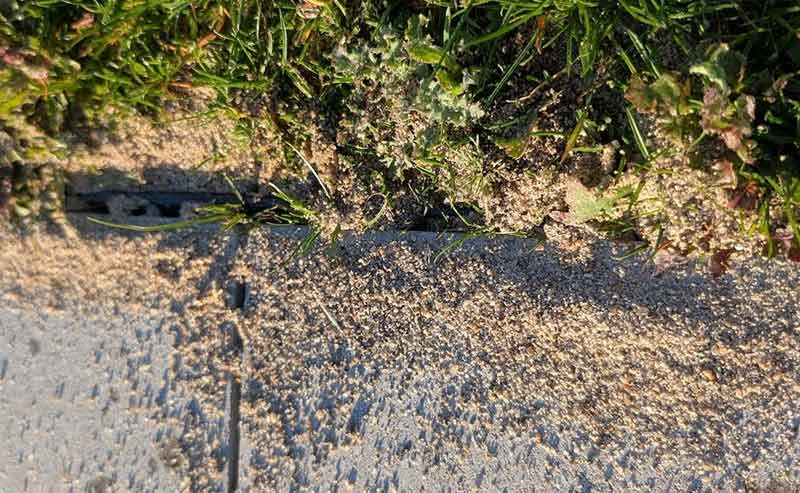
1. Identify the Species
You need to identify the ant species so you can treat the problem effectively.
In Berkeley, most infestations involve Argentine ants. These ants form massive colonies and are especially attracted to sweet foods.
To identify Argentine ants, look for long trails of small brown ants moving between outdoor nesting areas and indoor food sources.
If the issue isn’t Argentine ants, you’re likely looking for odorous house ants, carpenter ants, pavement ants, pharaoh ants, and occasionally fire ants or thief ants.
Here’s how to identify each:
- Odorous house ants are small, dark brown to black, and smell like rotten coconut when crushed; they often trail along counters and baseboards in search of sweets.
- Carpenter ants are much larger (up to ½ inch), usually black or black and red, and are found near damp or rotting wood, leaving behind small piles of sawdust-like debris.
- Pavement ants are small and dark, commonly seen coming from cracks in driveways or patios, sometimes with tiny soil mounds nearby.
- Pharaoh ants are very small and pale yellow to light orange, typically nesting indoors in warm areas like kitchens and bathrooms.
- Fire ants are reddish, build visible mounds in lawns, and deliver a painful sting, while thief ants are extremely tiny and pale, often sneaking indoors to feed on greasy or protein-rich foods.
It’s important to identify the type of ant before treating them because different species respond to different products and baits.
Using the wrong treatment can make the problem worse by causing the colony to spread or relocate instead of eliminating it.
2. Place Bait Outside
It may seem logical to place bait indoors, where you’re actually seeing the Argentine ants.
Unfortunately, this can actually attract more ants into your space.
Instead, place bait outside along ant trails and near nesting areas.
Argentine ant nests are usually found outdoors in damp soil, under mulch, rocks, or along your home’s foundation.
If you see thick, steady trails of ants moving in and out of the same crack or ground-level spot, there’s likely a nest nearby.
Worker ants will carry the bait back to the colony, helping eliminate the infestation at its source.
If you’re trying to match bait to the ant, here’s a simple breakdown:
- Argentine ants prefer sweet baits.
- Odorous house ants usually go straight for sweets like sugar-based liquid baits, though they may nibble on protein at certain times of year.
- Carpenter ants tend to want protein in the spring (to feed their young) and switch to sugary baits in the summer.
- Pavement ants often prefer protein or greasy baits, but won’t turn down sweets.
- Pharaoh ants are most responsive to slow-acting protein or grease-based baits.
- Fire ants usually go for oily, protein-rich granular baits.
- Thief ants are especially drawn to greasy, protein-heavy foods rather than sugar.
3. Get Rid of Honeydew-Producing Insects
If you notice ants around trees, shrubs, or plants, honeydew-producing insects are likely nearby.
Common honeydew pests include:
- Aphids. Small, soft insects that cluster on stems and leaves.
- Whiteflies. Tiny white insects found under leaves.
- Scale insects. These look like small bumps stuck to stems or branches.
- Mealybugs. White, cottony insects often found on houseplants.
- Psyllids. These are small jumping insects sometimes called plant lice.
Controlling these insects removes a major food source for ants. Once the honeydew is gone, ants are much less likely to stay on your property or enter your home.
4. Clean Up Sugar Spills and Residue Promptly
Even tiny amounts of sugar can attract ants indoors.
Make sure to:
- Wipe counters and surfaces regularly
- Clean up spills immediately
- Store food in sealed containers
- Sweep and mop floors frequently
- Remove trash promptly
It’s also important to wipe away ant trails wherever you see them pop up.
Since ants leave behind scent trails that guide other ants to food sources, getting rid of them is a great way to disrupt their navigation.
Got Ants in Berkeley, CA? We Can Help!
Ant control starts outside. By removing what attracts them and treating exterior trails before they get in, you can stop most ant problems before they start.
If your DIY ant treatment isn’t working, Smith’s can help! Give us a call today to learn more about our team and our proven ant control services: (408) 871-6988.
Why are ants so common in Berkeley, CA?
Berkeley’s mild climate allows ants to stay active year-round. Plus, the area’s lush landscaping, dense vegetation, and abundant food sources create ideal conditions for large ant colonies to thrive.
What kind of damage do ants cause?
Most ants are primarily nuisance pests, but they can contaminate food, create unsanitary conditions, cause structural damage, and establish large colonies that are difficult to get rid of.
Do I need ongoing ant control?
In many cases, yes. Because ants form large, persistent colonies outdoors, ongoing monitoring and exterior treatment help prevent reinfestation and keep your home protected long-term.